Taiwan Semiconductor Manufacturing Co., the world’s largest chipmaker, is paying a steep price for its massive U.S. expansion, as political pressure from President Donald Trump to manufacture advanced semiconductors domestically cuts into the company’s profitability.
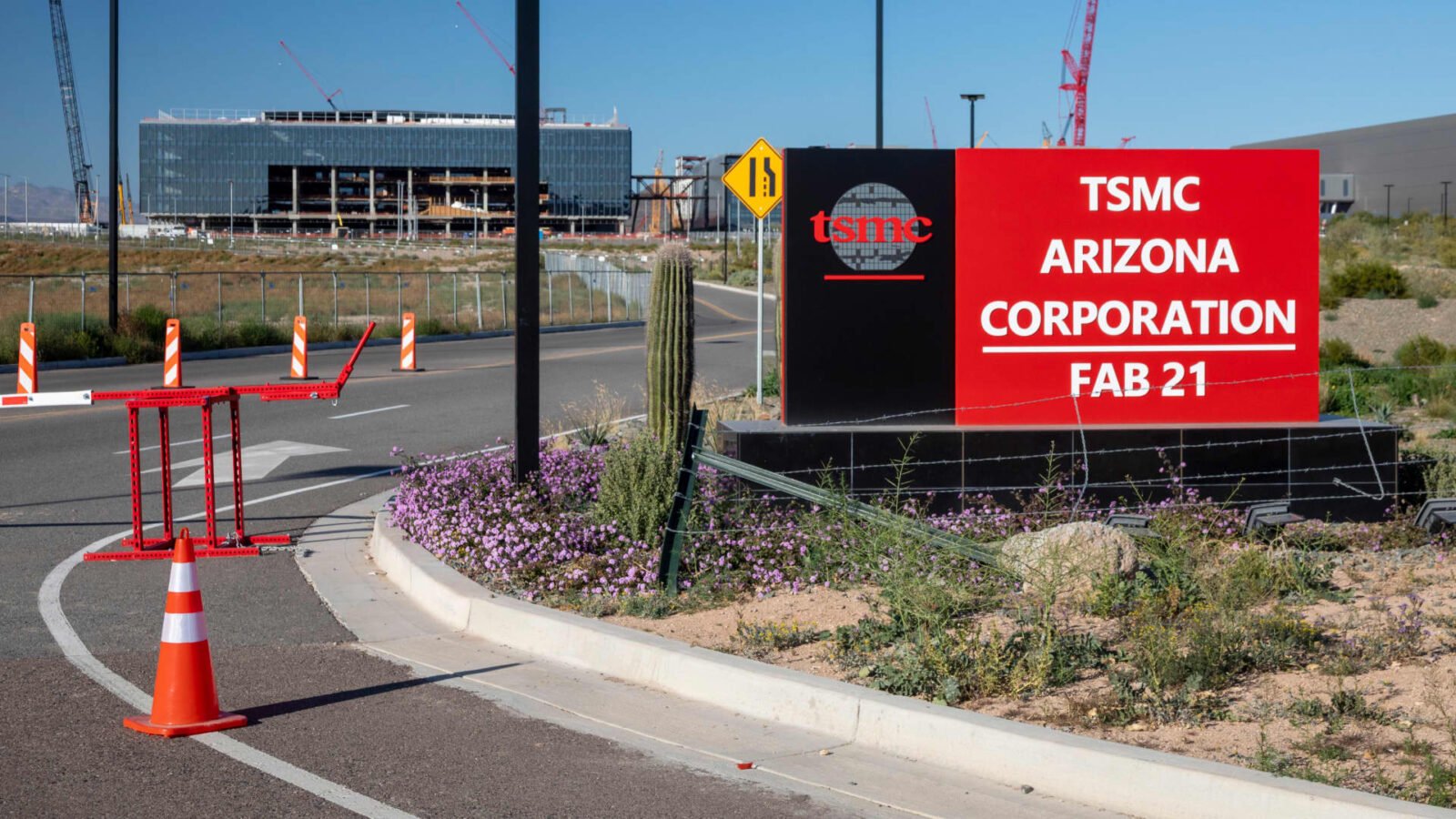
Since Trump’s return to power in 2025, TSMC has committed $200 billion to American operations, including a $100 billion investment unveiled last week for advanced semiconductor manufacturing and packaging facilities. The announcement came after repeated threats from the president to impose tariffs on companies that don’t manufacture in the United States.
Despite record-breaking quarterly results driven by the artificial intelligence boom — TSMC’s market capitalization has more than doubled in the past 12 months — the company’s margins are taking a hit from overseas expansion. CFO Wendell Huang disclosed on an earnings call that while gross margin increased ahead of guidance, gains were offset by dilution from overseas fabrication plants.
Huang warned that margins will face further dilution over the next several years as overseas fab projects ramp up production. The company forecasts gross margin dilution of 2% to 3% in the early stages of the overseas fab ramp-up, widening to 3% to 4% in later stages.
Higher U.S. Costs Strain Profitability
Building semiconductors in the United States is considerably more expensive than in Taiwan. According to Phelix Lee, senior equity analyst at Morningstar, TSMC’s U.S.-produced chips could cost 20% to 50% more than those manufactured in Taiwan, depending on subsidy timing, tax credit recognition, and other cost fluctuations.
TSMC is reportedly planning to raise prices for both advanced and mature chip production by up to 10% in 2027, according to Nikkei. The company declined to comment on pricing when contacted by CNBC.
Analysts expect much of the increased production costs will be passed along to customers. Gaurav Gupta, vice president analyst at Gartner, noted that TSMC’s dominance in the leading-edge node market means a large portion of increased costs would have to be absorbed by clients who are either looking to diversify or have mandates from the U.S. government to purchase domestically manufactured chips.
Political Pressure Driving Expansion
While other Asian chipmakers including SK Hynix are developing U.S. facilities, TSMC has made by far the largest commitment. A White House spokesperson characterized the company’s investments as a result of Trump’s trade and economic policy, citing a historic trade deal with Taiwan and renegotiated CHIPS program investments.
Commerce Secretary Howard Lutnick praised the expansion in a statement, saying TSMC’s additional $100 billion investment will create tens of thousands of American jobs and bring advanced semiconductor manufacturing back to America.
TSMC reported a 77.4% jump in second-quarter profit year over year on Thursday, soaring past estimates. The company’s second-quarter gross margin reached 67.7%, up from 66.2% in the first quarter.
Long-Term Supply Chain Shifts
Gil Luria, head of technology research at D.A. Davidson, suggested the margin difference is one TSMC can afford given its very high overall margins. Meanwhile, analysts noted that pressure for geographic diversification extends beyond political demands.
Lee from Morningstar pointed out that customers have increasingly sought geographical diversification after the COVID-19 pandemic disrupted global supply chains. He expects pressure for U.S.-made chips to persist beyond the Trump administration, though the mix of incentives and penalties remains uncertain.
TSMC’s CFO told CNBC the company continues to see a multiyear demand mega trend from its customers as it expands aggressively in the United States. The investments represent a fundamental shift in semiconductor manufacturing geography, driven by both political pressure and customer demand for supply chain resilience.
Source: www.cnbc.com — https://www.cnbc.com/2026/07/22/trump-pressure-ai-chips-us-tsmc-margins.html
This article is for informational purposes only and does not constitute financial, investment, tax, or legal advice. Do your own research and consult a licensed professional before making financial decisions.