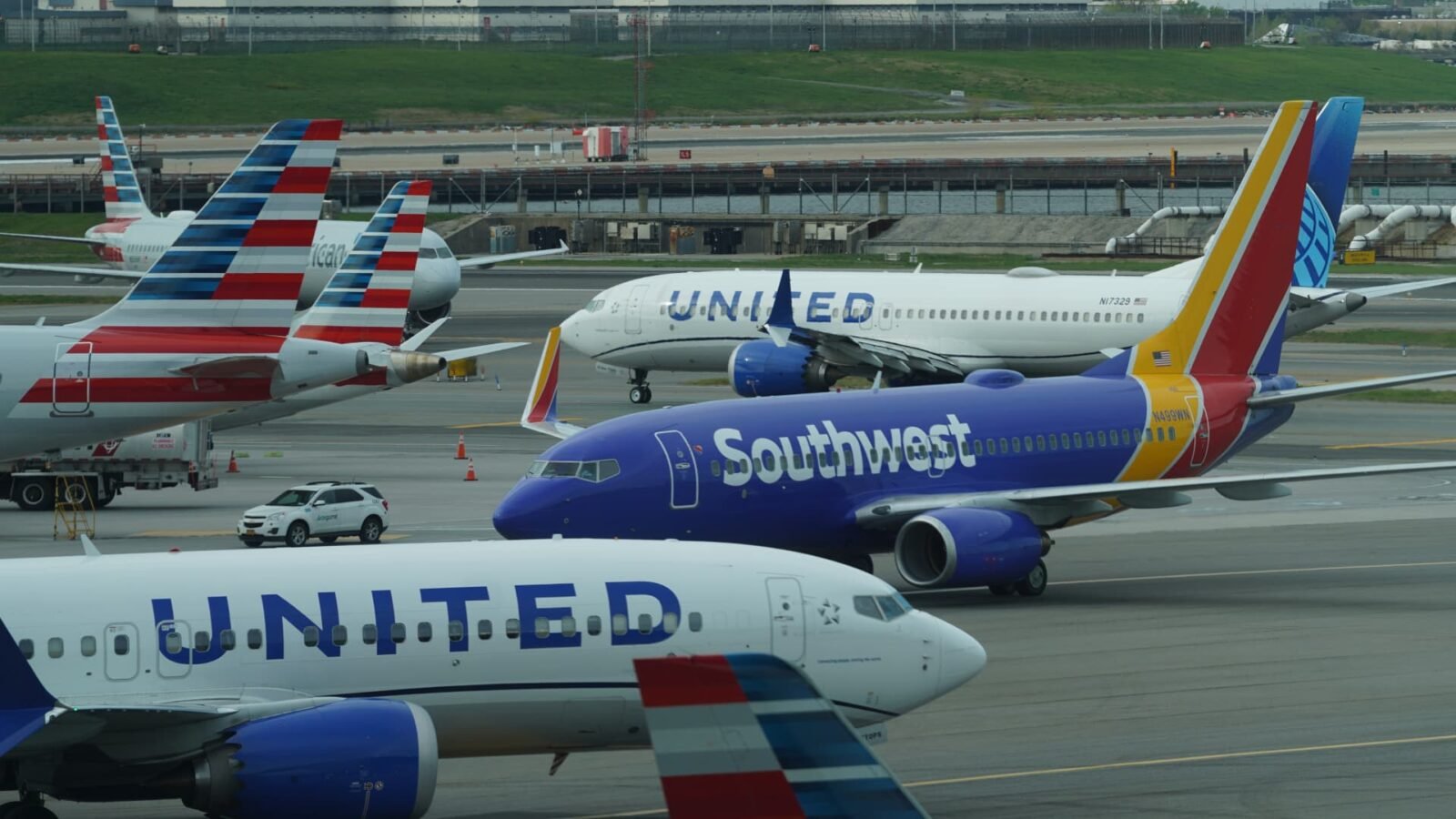
Travelers looking for relief from high airfares shouldn’t hold their breath. U.S. airfare rose 26.5% in June compared with the same month a year earlier, according to federal data, and airline executives say they plan to keep prices elevated.
Carriers report that customers are still booking flights even after substantial fare increases, giving airlines confidence in their pricing power heading into the fall and beyond. For Marjorie Aran and her husband, that meant paying a combined $800 for economy seats from New York to Chicago on United Airlines this week — a stark contrast to the “couple of hundred dollars” the trip once cost.
“We can afford it,” Aran said when asked whether high fares would prompt her to skip a trip.
Fuel Costs Drive Fare Increases
The dramatic price surge stems largely from a sharp rise in jet fuel costs. United Airlines expects to pay about $6 billion more for fuel this year than it anticipated at the start of 2026. American Airlines forecast a similar $6 billion increase in fuel costs compared with last year — jumps of more than 50% from 2025 levels for both carriers.
According to S&P Global Energy Platts data, jet fuel prices have eased from four-year highs in April but remain up about 50% since late February, when U.S. and Israeli strikes on Iran sparked a months-long military conflict that disrupted a major shipping channel. As of Monday, U.S. Gulf Coast jet fuel was trading at about $3.60 per gallon, down from $4.78 in April.
The fuel market volatility prompted extraordinary measures. Southwest Airlines sent a boat carrying more than 12 million gallons of jet fuel — roughly a week’s supply — from Houston to Los Angeles through the Panama Canal in May, marking the first time the carrier had shipped fuel domestically by sea. The move came as Southwest feared a supply crunch on the import-reliant West Coast.
Airlines Passing Costs to Customers
Southwest’s average one-way fare reached $225.61 in the second quarter, up from $186.65 during the same period in 2025. “Despite high fuel and high prices, we’re seeing really strong demand,” Southwest CEO Bob Jordan told CNBC in late July.
United Chief Commercial Officer Andrew Nocella told analysts on a July 16 earnings call that the airline “observed minimal to no negative impact on demand from higher price points, a trend we see continuing.” United expects unit revenue for the remainder of 2026 to rise and potentially exceed the second quarter’s increase.
Beyond fuel, airlines face escalating costs across the board. “Labor costs have escalated dramatically. Maintenance is off the charts in terms of escalation,” United CEO Scott Kirby said on the call, noting these are expenses every airline must pay.
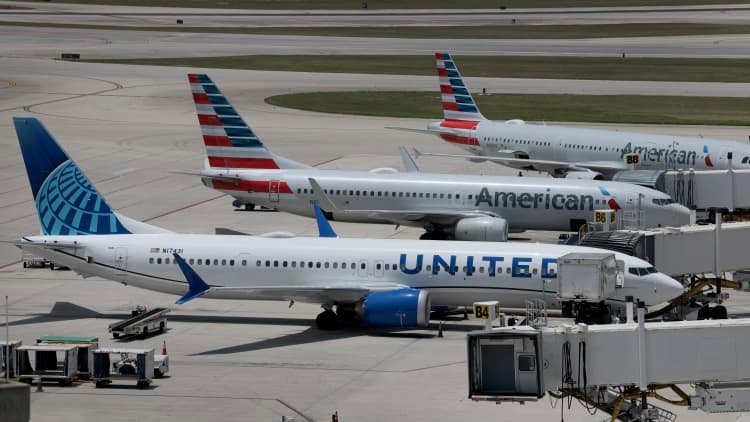
The cost pressures have led carriers to trim schedules this year, reducing the number of flights on certain routes and giving customers fewer options — a dynamic that supports higher fares.
Market Consolidation Reduces Competition
The four largest U.S. carriers — American, Delta Air Lines, United and Southwest — have increased their market share to 82.1% of seats flown by U.S. airlines this year, up from 80.7% last year and 79.7% in 2022, according to Cirium data.
That consolidation accelerated when Spirit Airlines collapsed in May, removing tens of millions of seats from the market overnight. The iconic discount carrier, which had filed for bankruptcy protection twice in less than a year, shut down before dawn on May 2 after failing to reach a deal with bondholders.
Other low-cost carriers are moderating growth or shrinking to conserve cash. Avelo is reducing operations, as is the combined Allegiant and Sun Country following their merger in May, according to Cirium.
Some budget carriers are planning expansion. Frontier Airlines, now the largest U.S. discounter, saw its average fare revenue jump to $63.04 in the second quarter from $40.94 a year earlier. The carrier plans to grow capacity as much as 18% this quarter and forecast unit revenue growth of 20%.
JetBlue Airways is also planning to grow while maintaining what CEO Joanna Geraghty described as “a conservative capacity profile given that the geopolitical backdrop remains fluid and fuel remains volatile.” The carrier forecast a unit revenue increase of as much as 16.5% in the current quarter.
Passenger Sentiment and Future Outlook
The critical test will come in the months ahead as peak summer travel season ends. Airport checkpoint screenings were down 0.5% from last year through July 24, and down 2.6% over the four weeks ending that day, according to Bernstein analyst David Vernon.
Justin Wittekind, 27, who paid about $340 on United for a flight from New York to Ontario, California, said he would likely draw the line at $400 for a round trip. “But if I have to go home … I’ll pay $400, but I wouldn’t like it,” he said.
Airlines are betting that millions of passengers will make the same calculation — and keep booking flights regardless of price.
Source: www.cnbc.com — https://www.cnbc.com/2026/08/02/flights-are-getting-even-more-expensive-as-fuel-prices-rise.html
This article is for informational purposes only and does not constitute financial, investment, tax, or legal advice. Do your own research and consult a licensed professional before making financial decisions.