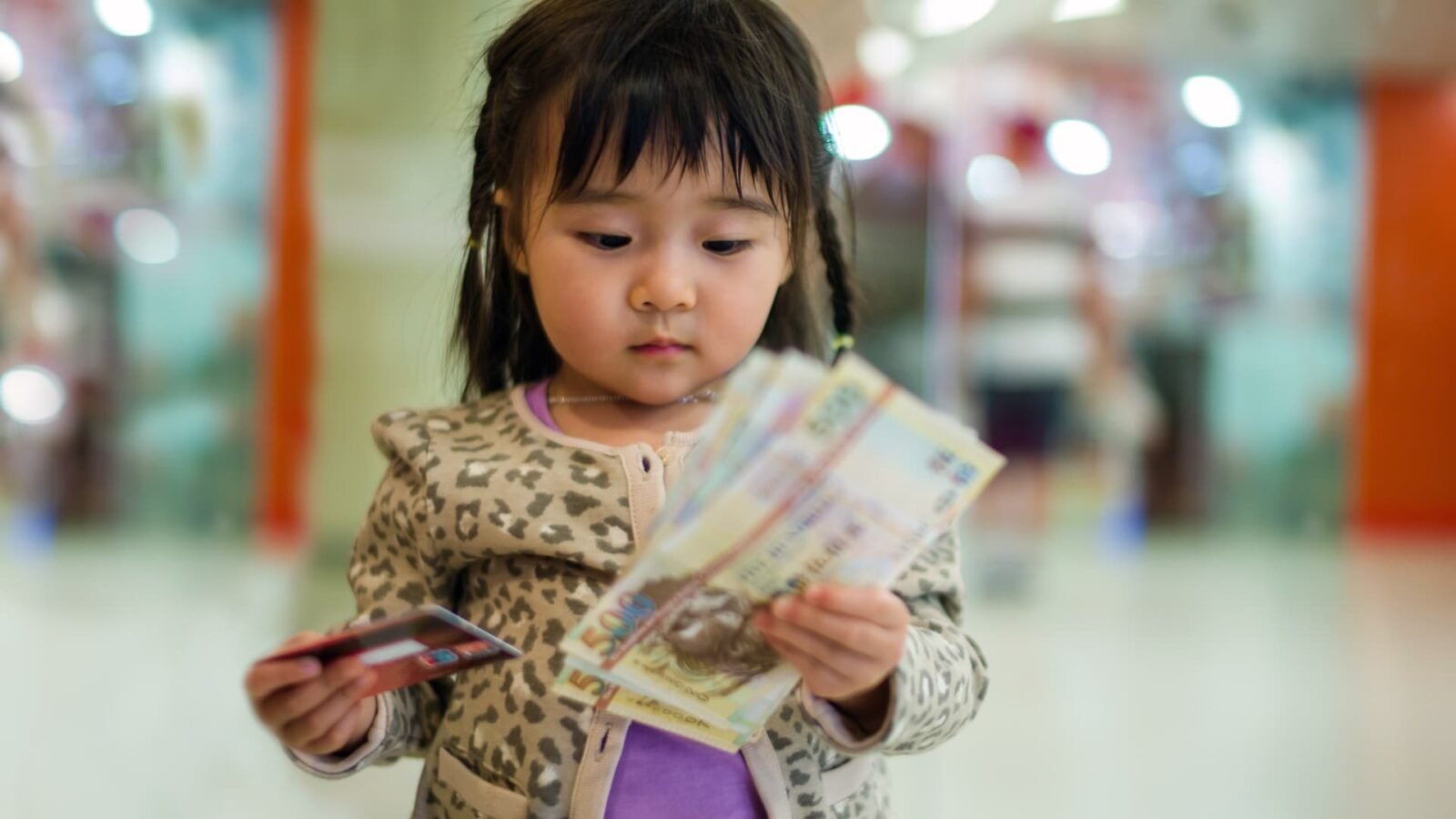
South Korean parents are opening investment accounts for their children at unprecedented rates, often before the infants can even crawl, in a trend that signals a cultural shift in how families approach wealth accumulation.
At Mirae Asset Securities, the country’s largest brokerage by market capitalization, accounts for children under one year old have nearly tripled from a year ago, reaching approximately 15,000 in June. New account openings for those under nine years old surged nearly 60% to around 185,000 during the same period, excluding duplicate accounts.
The surge follows Korea’s AI-powered market rally and represents what some economists view as a generational shift in wealth planning. Lee Hye-won, a nurse, told CNBC that she and her spouse opened an account for their first child at age four and for their second child immediately after birth. The family invests between 300,000 won ($210) and 400,000 won monthly in U.S. exchange-traded funds, primarily those tracking the S&P 500.
“We felt that, when it comes to managing our children’s accounts, the length of time invested matters more than the investment amount,” Lee said.
Compounding Returns Over Decades
The motivation centers on giving children the advantage of time in the market. Lee Jun-hyeok, an office worker, explained his decision to open an account right after his daughter’s birth: “I wanted to give my child the gift of time and the power of compounding during those years.”
Lee is making regular investments in the Korean semiconductor sector and U.S. physical AI-related stocks, both areas he sees as having high growth potential.
Jae-joon Woo, a professor of economics at DePaul University, told CNBC the trend is likely to persist even amid market volatility, as long as equity investing remains “a reliable way to build long-term wealth.”
Shifting Away From Real Estate
The trend marks a potential departure from South Korea’s traditional preference for real estate, which has long dominated household wealth. According to a survey by the Ministry of Data and Statistics, households held around three-quarters of their wealth in physical assets, primarily real estate, with the remainder in financial assets.
Tax considerations are playing a significant role in this shift. Korea applies progressive tax rates ranging from 6% to 45% on capital gains from properties owned for two years or longer, according to the National Tax Service. For properties held less than two years, rates jump to between 40% and 70%.
By contrast, most retail investors face no capital gains tax when selling Korea-listed shares unless they are major shareholders.
Tax-Exempt Gifting Fuels Participation
Gift tax exemptions provide another incentive. According to the Ministry of Government Legislation, parents can give up to 20 million won to a minor child tax-free once within a 10-year period. Parents are using this allowance to fund stock investments.
One parent using the online handle “leecoach_mom” said their initial concern wasn’t stock selection but understanding gift tax rules. “We looked into the relevant details ourselves and consulted with a tax accountant,” the parent said.
However, Woo noted that for most middle-income households, the primary motivation is saving for education and financial security rather than tax reduction.
Industry and Government Support
Brokerages are actively courting this demographic. Kakaopay Securities, an online brokerage linked to Kakao Corp., announced plans last month to distribute stocks worth 100,000 won to each infant born next year as part of an effort to expand its customer base.
The government has also taken steps to facilitate participation. In 2023, financial authorities revised guidelines to allow guardians to open accounts remotely via smartphone, eliminating the need to visit a branch.
“Allowing parents to open accounts remotely has removed a significant practical barrier,” said Jeong-woo Park, senior economist for South Korea at Nomura. He added that further simplification would likely increase the number of minors’ accounts, especially among households making small, regular investments, though total investment amounts would continue to depend on household wealth, market conditions, and tax considerations.
Source: www.cnbc.com — https://www.cnbc.com/2026/08/07/south-korea-investment-stock-baby-accounts.html
This article is for informational purposes only and does not constitute financial, investment, tax, or legal advice. Do your own research and consult a licensed professional before making financial decisions.